
DiárioLX is a digital newspaper about Lisbon. It comes from a journalism lab at LIACOM, the research unit of ESCS, the city's school of media and communication. It does slow journalism: long reads, photo essays, podcasts and videos, with no clickbait and no ads. For the final project of my degree at ISEL, we built the platform behind it.
The project had started with a first version on WordPress. WordPress could publish articles, but it soon showed its limits: it was hard to control, hard to shape around the newsroom, and hard to grow. So we built our own.
The easiest way to explain it is to follow one article, from draft to reader.
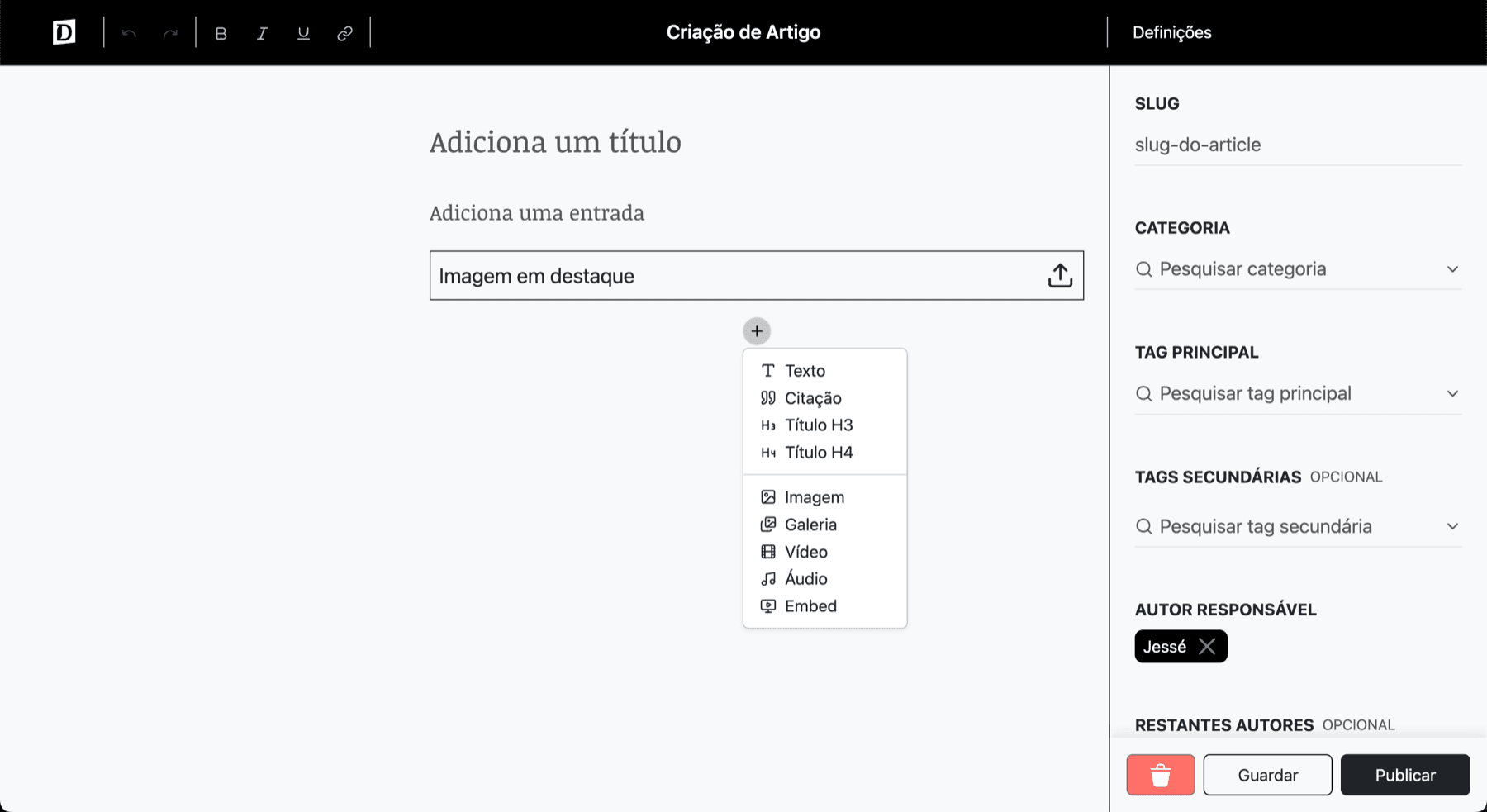
It starts in the editor. Writing feels like any text editor, but the article is made of blocks, a bit like Notion: paragraphs, headings, quotes, images and videos.
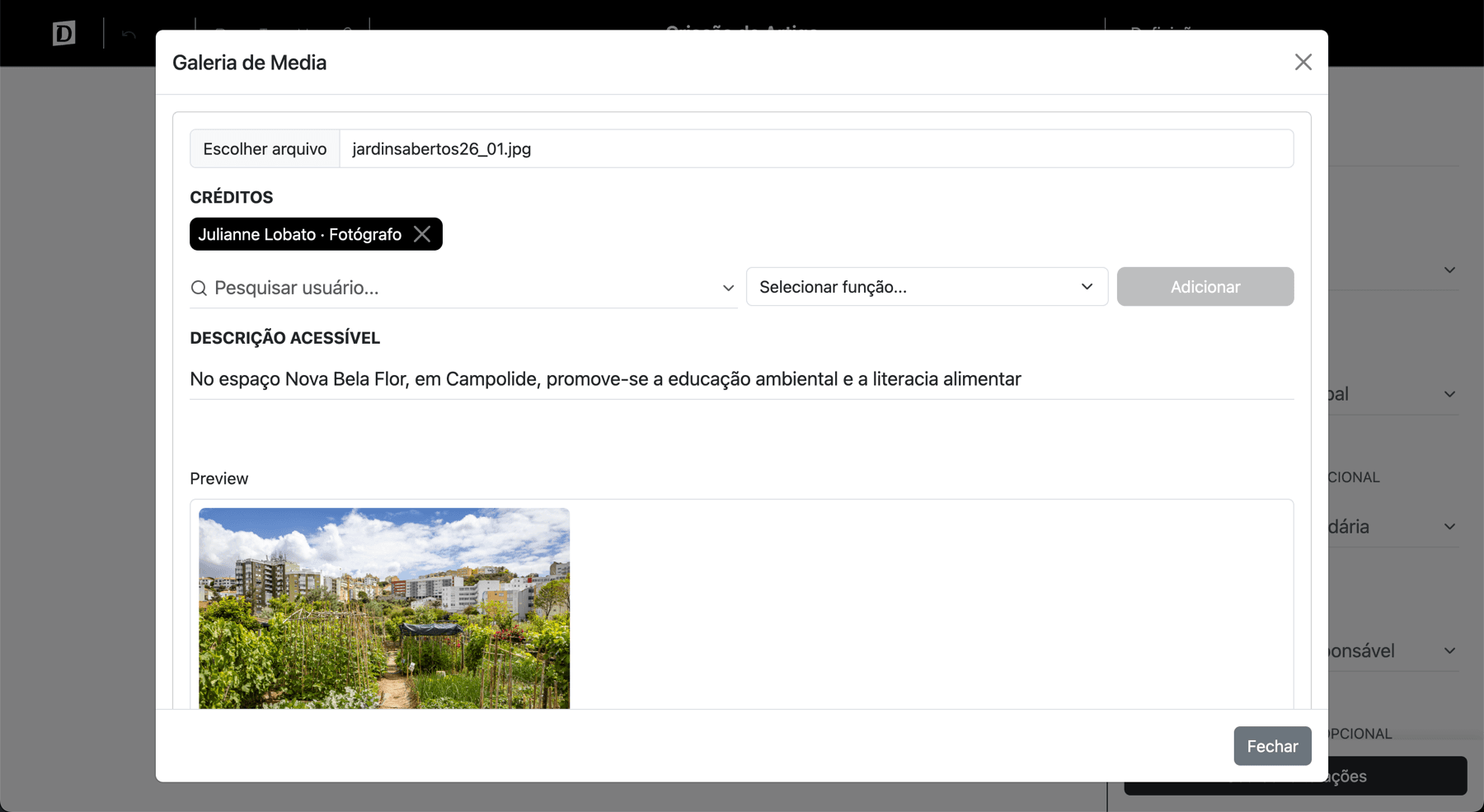
Then the journalist adds a photo, with its credits and a description for readers who can't see it, which go with it wherever it's used. Files can be big, videos up to 2 GB, so they upload directly, without slowing the rest of the system down.
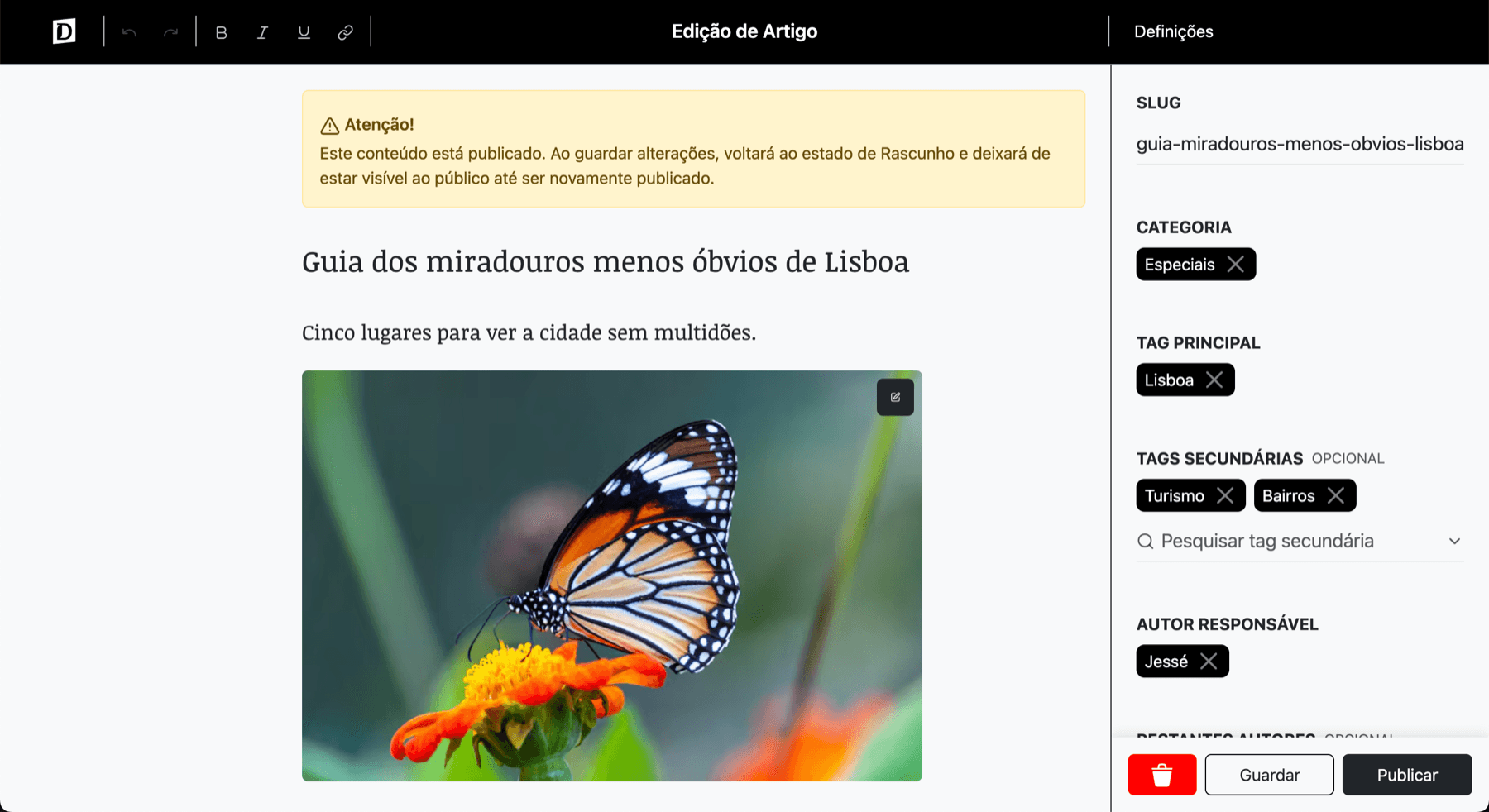
When the article is ready, it goes to review. Three roles keep this in order: contributors write, editors review and publish, and admins manage the team. An editor approves the article, to go live now or on a set date, or sends it back with a comment. And if someone edits an article that's already live, it goes back to draft and leaves the public site until an editor approves it again.
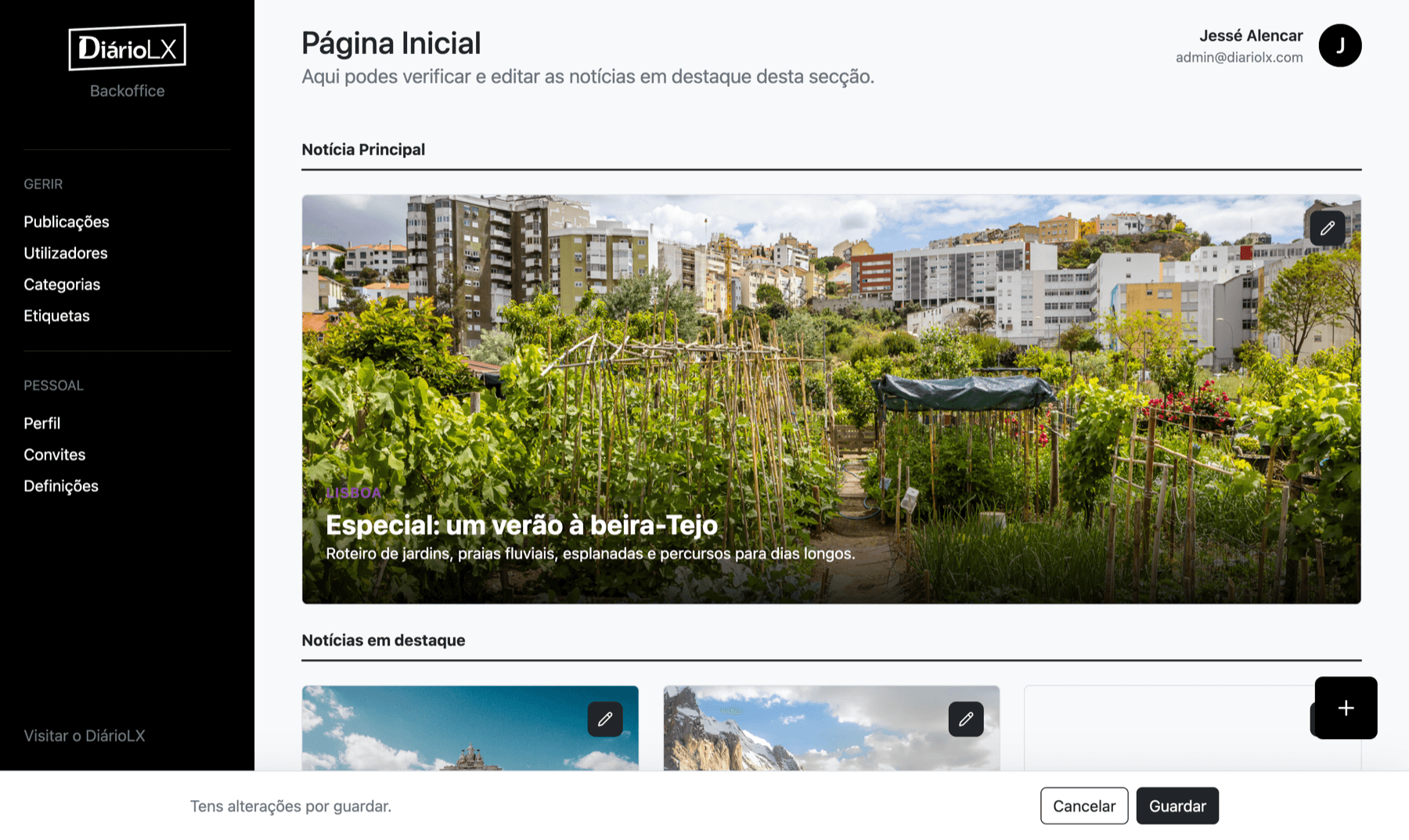
Once approved, the article can go on the homepage. Admins choose what goes into each section (highlights, featured stories, photos, podcasts, videos) without touching code.
Finally, a reader opens it, often from a link someone shared on WhatsApp or LinkedIn. That link shows the article's title and photo: nobody asked for it, but a newspaper lives on shared links, so I added it. The public site builds the page from the same blocks the journalist wrote, with the photos and their credits in place.
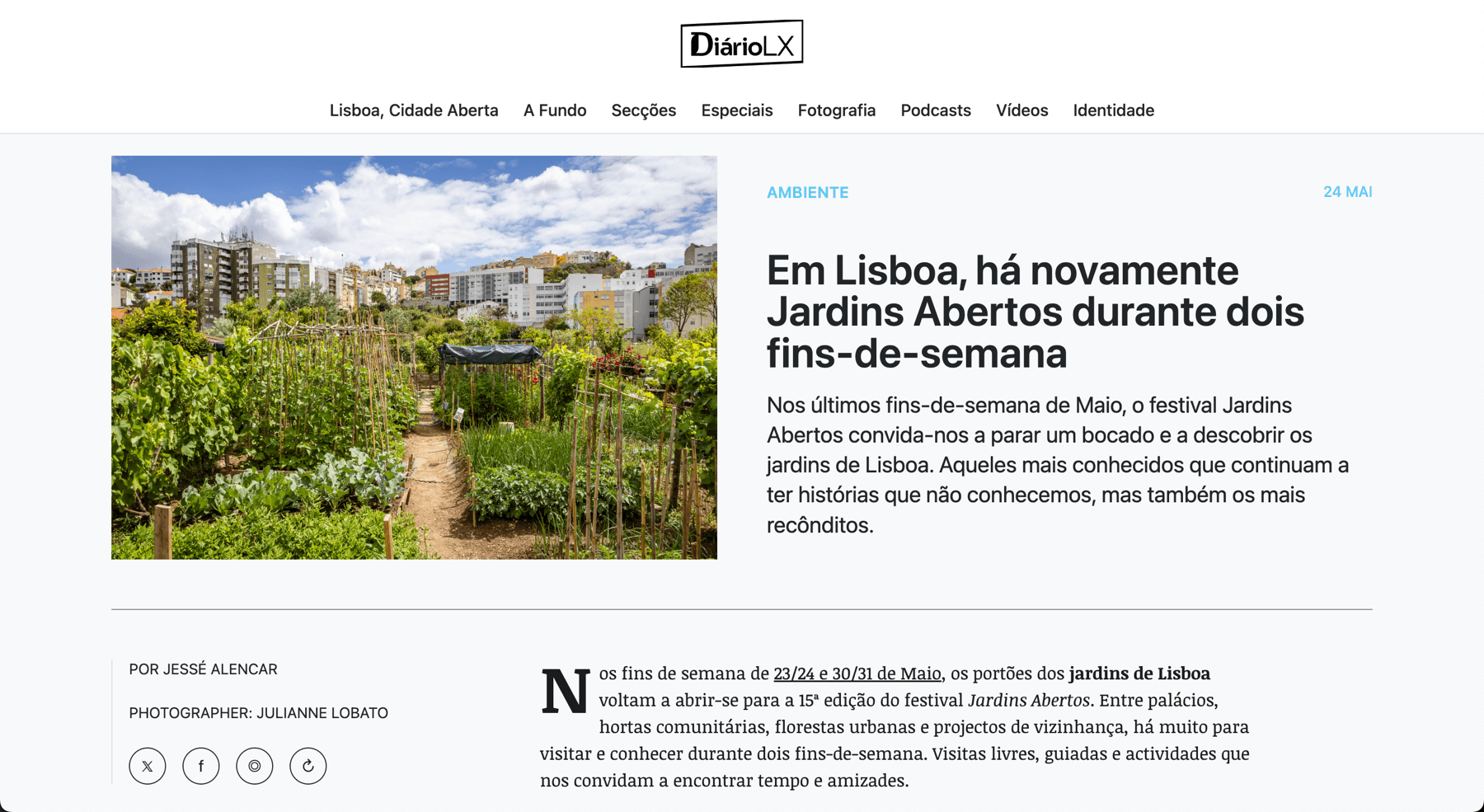
And articles are only part of it. The same platform runs podcasts with their episodes, videos and photo essays, each with its own page, plus categories, tags, search, author and team pages, and a layout built for phones. In the backoffice, new people join by invite, every approval and rejection is kept, with who made it and why, and admins edit the menu, contacts and legal details from a settings page.
If you're curious about how it works underneath, I wrote it up as engineering notes, with diagrams you can click: DiárioLX, engineering notes →